Article Overview
Telehandlers have become one of the most efficient machines on construction and agricultural job sites by combining lifting, reach, and mobility into a single unit. Instead of relying on multiple machines for different tasks, a properly equipped telehandler can handle material movement, elevated placement, and jobsite support work. This article explains how telehandlers reduce the need for forklifts, cranes, and rough terrain lifts, and how the right setup improves efficiency, reduces equipment congestion, and keeps projects moving.
Why Are Telehandlers Used As A Multi-Purpose Machine?
Telehandlers are designed to handle a wide range of tasks that would traditionally require multiple pieces of equipment. Their telescoping boom allows operators to lift, carry, and place materials at height or at extended reach, all from one machine.
This versatility makes them a practical solution for job sites that need to move materials efficiently without increasing equipment count. By combining multiple functions into one unit, telehandlers simplify operations and improve coordination across crews.
To understand the fundamentals of how these machines function on site, it is helpful to review What Are Telehandlers And Why Are They Essential On Construction And Agricultural Job Sites?, especially when evaluating their role in material handling and jobsite efficiency.
How Do Telehandlers Replace Forklifts?
Traditional forklifts are limited to flat, stable surfaces and vertical lifting. Telehandlers provide the same lifting capability while adding forward reach and rough terrain performance.
On construction and agricultural sites, this allows operators to move palletized materials across uneven ground and place them directly where needed without repositioning. The added reach reduces handling steps and keeps materials flowing efficiently.
This makes telehandlers a more adaptable solution for outdoor environments where forklifts are limited.
How Do Telehandlers Reduce The Need For Cranes?
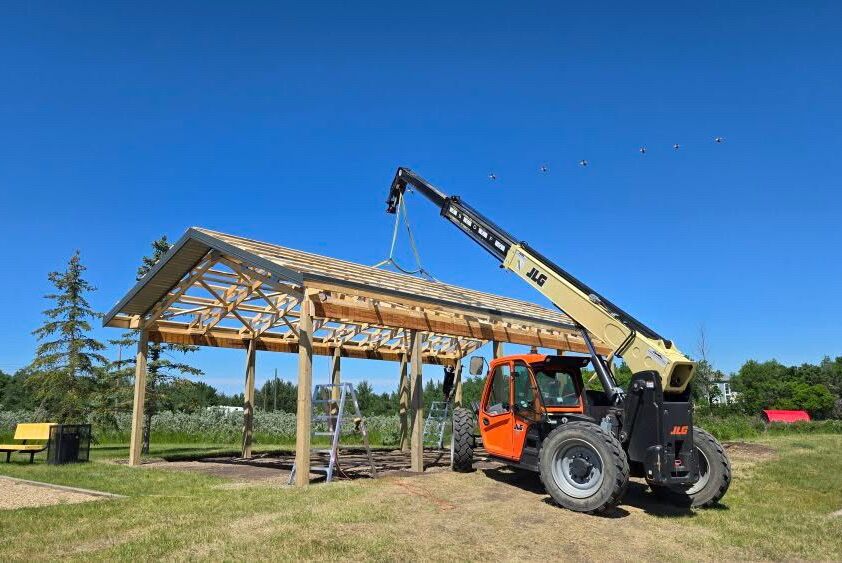
Cranes are essential for large lifts and heavy structural work, but many jobsite tasks do not require full crane capacity. Telehandlers can handle a wide range of lifting and placement tasks, particularly during framing, material delivery, and general construction phases.
With the ability to extend forward and upward, telehandlers can place loads onto upper levels, over obstacles, or into framed structures. This reduces the need for additional lifting equipment during early and mid-stage construction.
For many projects, this allows crews to maintain progress without introducing additional machines to the site.
How Do Telehandlers Replace Rough Terrain Access Equipment?
Telehandlers can also support elevated work when equipped with an approved man basket. This allows crews to perform installation and maintenance tasks at height while working on uneven or sloped terrain.
Unlike traditional access equipment that requires stable, level ground, telehandlers provide the flexibility to operate in more varied conditions. This makes them a practical option for job sites where access points are limited or ground conditions are less predictable.
By combining lifting and access capabilities, telehandlers reduce the need for separate machines.
How Does The Right Attachment Setup Improve Efficiency?
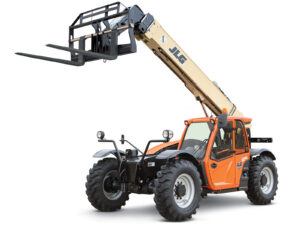
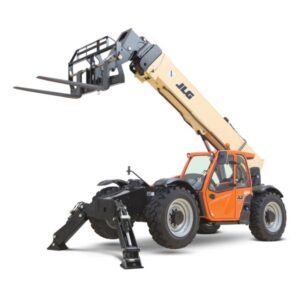
Attachments play a major role in how effectively a telehandler replaces multiple machines. While pallet forks are the standard configuration, additional attachments allow the machine to handle more specialized tasks.
Common attachment options include:
● Swing carriage for utility work
● Truss jibs for framing and structural placement
● Truss jibs with a hydraulic winch for handling suspended loads
● Approved man baskets for safe elevated work
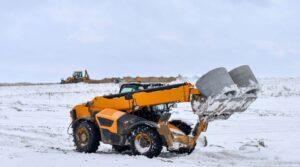
● Buckets for waste for general material handling
With the right setup, a telehandler can transition between tasks quickly, reducing downtime and eliminating the need to bring in additional equipment.
How Do Telehandlers Reduce Jobsite Traffic And Improve Workflow?
Fewer machines on site means less congestion, improved visibility, and simpler coordination between operators. Telehandlers help streamline operations by taking on multiple roles, reducing the number of machines moving through active work areas.
This improves safety by limiting interactions between equipment and personnel while also allowing crews to work more efficiently. With fewer machines to manage, communication becomes clearer and workflows remain consistent.
Why Do Telehandlers Improve Overall Jobsite Efficiency?
Telehandlers improve efficiency by consolidating tasks, reducing equipment overlap, and supporting steady material flow. Instead of coordinating multiple machines for lifting, placing, and transporting materials, crews can rely on one machine to handle the majority of these tasks.
With the right telehandler in place, job sites benefit from:
● Reduced equipment congestion
● More consistent material handling
● Improved coordination across trades
Understanding how telehandlers replace multiple machines helps contractors and agricultural operators simplify operations and maintain productivity throughout the project.
For a deeper breakdown of machine sizes, lift capacity, and reach considerations, refer to Types Of Telehandlers Explained: Load Capacity, Reach, And Jobsite Applications to ensure the right telehandler is selected for the job.
For dependable telehandler rentals backed by real jobsite experience across Southern Alberta, contact Mountain View Equipment Rentals to request a quote.