Article Overview
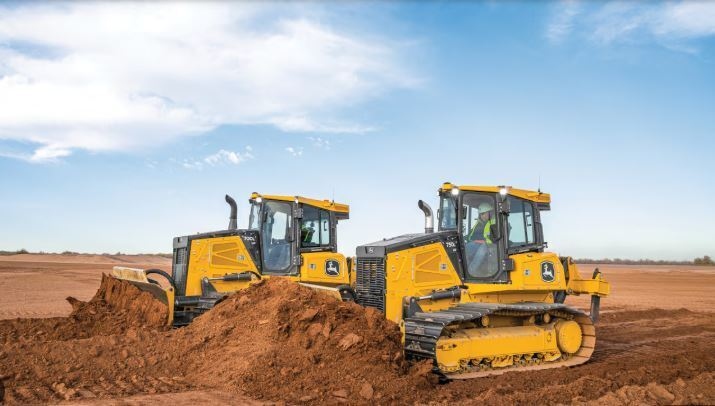
Understanding the types of dozers is essential for selecting the right machine for pushing, grading, and site preparation. Different types of dozers are designed for specific terrain conditions, production demands, and precision requirements. This article explains what are the different types of dozers, including size classes and configuration variations, and how choosing the right machine improves efficiency and helps control equipment rental costs.
What Are The Different Types Of Dozers?
When evaluating the types of dozers, it is important to look beyond just size. Modern dozers are categorized based on a combination of machine size, blade type, and undercarriage configuration.
Manufacturers offer multiple variations of the same base machine to match specific working conditions. For example, models like the John Deere 750J and 850J are available in several configurations designed for different ground pressures, stability needs, and production goals.
This flexibility allows operators to choose a machine that aligns closely with jobsite requirements rather than relying on a one-size-fits-all approach.
How Are Dozers Classified By Size?
The most common way to define the different types of dozers is by size class, which directly affects pushing power, grading capability, and overall productivity.
Small dozers are built for precision and maneuverability. They are commonly used in residential construction, landscaping, and light agricultural work where space is limited and control is critical.
Medium dozers provide a balance between power and accuracy. They are widely used for general construction, road building, and farm site preparation because they can handle moderate volumes of material while still maintaining grading precision.
Large dozers are designed for high-production environments. These machines are used in large-scale earthmoving, land clearing, and major development projects where moving significant volumes of material efficiently is the top priority.
What Configuration Options Affect Dozer Performance?
Beyond size, one of the most important distinctions between the types of dozers is how they are configured. Modern machines are built with multiple track and frame options that directly influence performance.
Dozers can be configured in several ways to match terrain and load conditions:
● Standard Track (balanced performance for general use)
● Long Track (improved stability and grading control)
● Wide Track (better flotation on softer ground)
● Wide Long Track (maximum stability and surface contact)
● Low Ground Pressure (LGP) (designed for soft or wet conditions)
These configurations are not cosmetic. They change how weight is distributed across the ground, how stable the machine feels during grading, and how effectively it can push material. For example, low ground pressure models are specifically designed to reduce sinking and maintain traction in soft soil conditions.
How Do Blade Types Influence The Different Types Of Dozers?
Blade configuration plays a major role in how a dozer performs on site. While size determines power, the blade determines how material is handled.
Straight blades are used for fine grading and short-distance pushing where precision is required. Universal blades are designed for carrying larger loads over longer distances due to their curved shape and side wings. Semi-universal blades provide a balance between capacity and control, making them a versatile option for mixed-use applications.
Some machines are also equipped with power-angle-tilt blades, which allow operators to adjust blade position more precisely. Different blade setups are paired with specific machine frames to maintain grading accuracy and structural strength across applications.
How Do Ground Conditions Determine The Right Dozer?
Ground conditions are one of the most important factors when choosing between the different types of dozers. Soil type, moisture content, and terrain all influence how a machine performs.
Tracked dozers are preferred in most applications because they provide consistent traction and stability. On firm ground, standard or long-track machines perform efficiently and allow for accurate grading. On soft, muddy, or agricultural land, wide-track and low ground pressure machines distribute weight more evenly, reducing the risk of sinking and improving control.
Choosing the wrong configuration for the ground conditions can lead to reduced efficiency, excessive wear, and inconsistent results.
When Should You Use Each Type Of Dozer?
Each type of dozer is designed with a specific purpose in mind. Smaller machines are best suited for tight-access work and finish grading where control is critical. Medium machines are ideal for general site preparation and agricultural projects where both power and precision are required. Larger machines are intended for high-volume material movement and large-scale site development.
Configuration also plays a role in this decision. A medium dozer with a wide track setup may outperform a larger machine on soft ground because it maintains better traction and stability.
Matching both size and configuration to the job ensures the machine operates efficiently without unnecessary strain or downtime.
Why Does Choosing The Right Dozer Reduce Costs?
Selecting the correct dozer is not just about performance. It also directly affects project costs.
Using a machine that is too small can slow progress and increase labour time. Using a machine that is too large can increase fuel consumption without delivering additional value. The right dozer balances power, control, and efficiency, allowing operators to complete tasks with fewer passes and less rework.
Understanding what are the different types of dozers helps project managers and operators make informed decisions that improve productivity while keeping costs predictable.
For reliable dozer rentals tailored to your project requirements, contact Mountain View Equipment Rentals to request a quote.