Article Overview
Understanding what is a manlift is essential for selecting the right equipment for safe and efficient elevated work. This article explains how manlifts function, when they should be used on construction, agricultural, and industrial jobsites, and how boom lifts and scissor lifts fit within this category. By breaking down working height, reach, terrain, and mobility considerations, crews can confidently choose the right solution for both productivity and safety.
What Is A Manlift?
A manlift is a general term used to describe equipment designed to safely lift workers to elevated positions. Rather than referring to a single machine, it includes multiple types of aerial work platforms, most commonly boom lifts and scissor lifts.
These machines are built specifically for personnel access. They provide a stable platform, controlled movement, and precise positioning so crews can complete tasks at height safely and efficiently.
How Does A Manlift Work?
Manlifts use hydraulic or electric systems to raise a platform vertically or position it at an angle. The operator controls movement from the platform, allowing for accurate placement at the working height.
Depending on the type of manlift, movement may be:
● Straight vertical for direct overhead work
● Articulating or telescoping for extended reach and positioning
This flexibility allows crews to access everything from open overhead spaces to tight or obstructed areas.
What Types Of Manlifts Are Used On Jobsites?
Understanding what a manlift is requires knowing the two main types used in the field.
Scissor Lifts
Scissor lifts move straight up and down and are ideal for stable, vertical access.
They are commonly used for framing and finishing work, electrical and mechanical installation, and interior construction and maintenance.
Their main advantage is platform size and stability. They allow multiple workers, tools, and materials to be positioned together, improving efficiency and reducing unnecessary movement.
Rough terrain models perform well outdoors, offering strong traction, gradeability, and stable operation on uneven jobsite surfaces, while electric models are better suited for indoor use on smooth, finished surfaces such as concrete or finished floors.
Boom Lifts
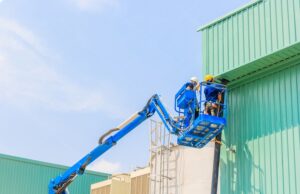
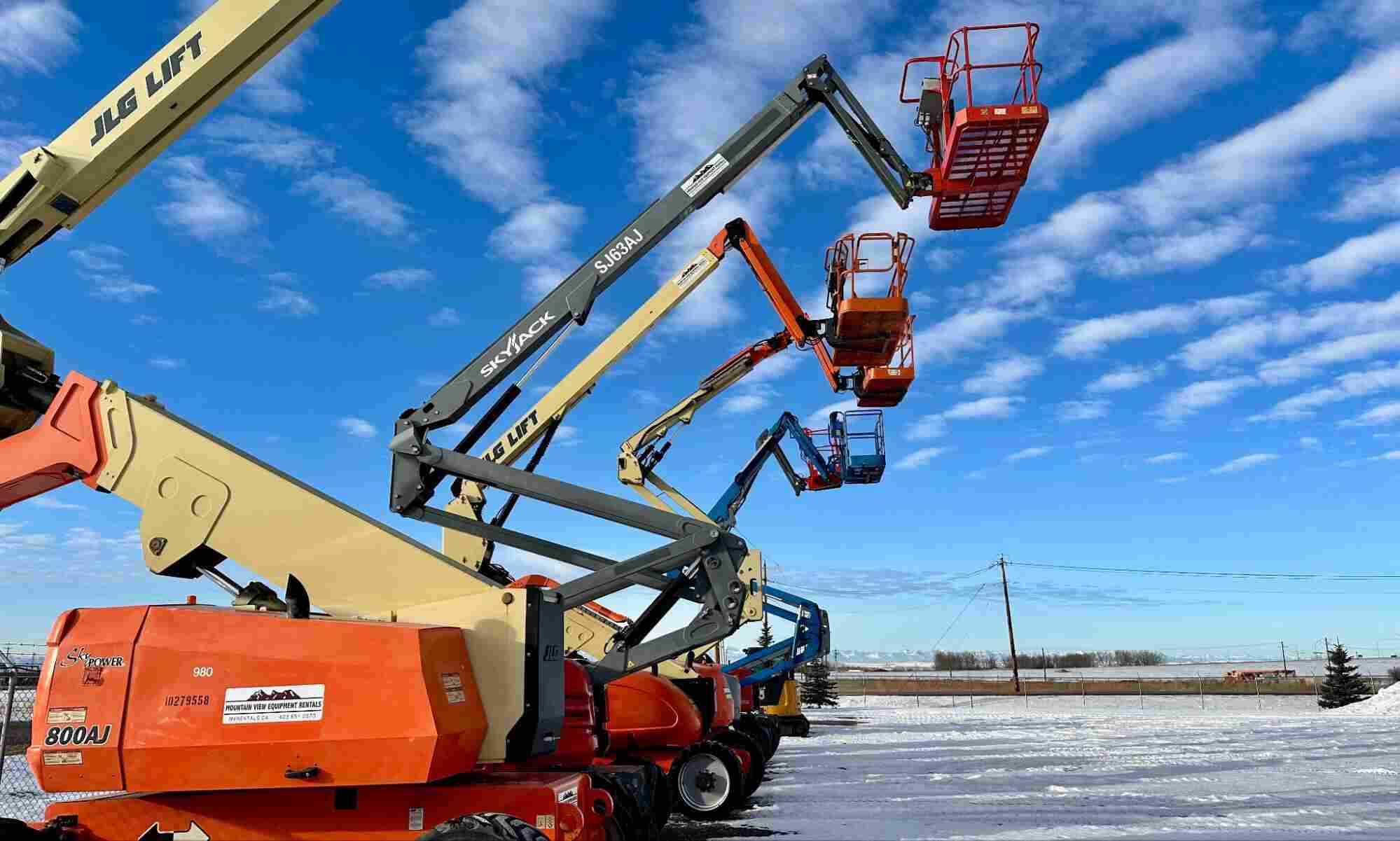
Boom lifts provide both vertical and horizontal reach, allowing operators to move up, out, and over obstacles.
They are commonly used for structural and exterior work, facility maintenance, and accessing areas behind or above obstructions.
Their biggest advantage is positioning and reaching heights that a scissor lift cannot access. Crews can reach areas that are not directly above the machine, making them a strong choice for more complex jobsite layouts.
When Should You Use A Manlift On A Jobsite?
Manlifts are the right choice when work requires safe, stable access at height for extended periods.
They are ideal for:
● Tasks that require precision at elevation
● Jobs where workers need tools and materials alongside them
● Projects where consistent positioning improves workflow
They are especially effective on jobsites with stable ground conditions or where equipment can be positioned efficiently for repeated use.
How Do Manlifts Compare To Scissor Lifts And Boom Lifts?
Since both scissor lifts and boom lifts fall under the manlift category, the decision comes down to how the work needs to be performed and what height needs to be reached.
Scissor lifts are best when work is directly overhead, larger platforms are needed, and multiple workers are operating at height, while boom lifts are best when reach beyond vertical access is required, obstacles must be navigated, and precise positioning is critical.
Both options provide safe elevated access. Choosing the right one ensures better efficiency and smoother jobsite operation.
How Do Manlifts Compare To Telehandlers?
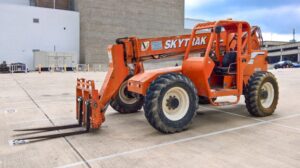
Manlifts are purpose-built for lifting personnel, but telehandlers can also support elevated work when equipped with an approved man basket.
Telehandlers add another level of flexibility by allowing crews to operate on rough or uneven terrain, reach areas where traditional manlifts may not position easily, and work at height in more complex site conditions.
This makes them a strong complement to manlifts, especially on jobsites with varying terrain.
To better understand how telehandlers compare as an access solution, it is helpful to review Types Of Telehandlers Explained: Load Capacity, Reach, And Jobsite Applications, especially when considering reach and positioning on complex job sites.
What Factors Should You Consider When Choosing A Manlift?
Choosing the right manlift starts with understanding the job requirements.
Key considerations include required working height, reach and positioning needs, ground conditions and terrain, and mobility across the site.
Modern manlifts are designed for stability, control, and ease of use, allowing crews to work confidently across a wide range of environments.
Why Are Manlifts Important For Jobsite Efficiency?
Manlifts provide a reliable and efficient way to complete elevated work without relying on ladders or temporary structures. They allow crews to position themselves accurately, work comfortably, and maintain consistent productivity throughout the day.
With the right machine in place, crews can reduce setup time, improve workflow, and complete tasks safely and efficiently.
Understanding what is a manlift and how each type performs ensures the right equipment is used from the start, keeping projects moving and teams working safely at height.
For reliable access equipment suited to your next project, contact Mountain View Equipment Rentals to find the right manlift for the job.