Article Overview
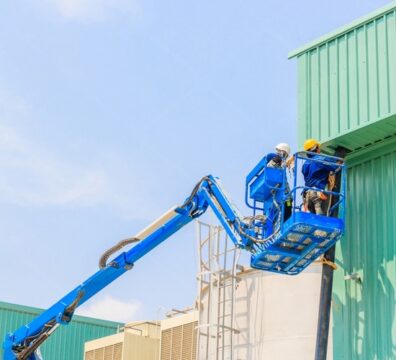
Understanding how high scissor lifts go is important for selecting the right equipment for safe and efficient work at height. Scissor lifts are available in several height ranges, with working height, platform capacity, and ground conditions all influencing which machine is best suited to the job. This article explains how scissor lift heights are measured, how indoor and rough terrain models differ, and how to choose a lift that supports efficient access for the work being completed.
How High Do Scissor Lifts Go?
Scissor lifts are available in several height classes because elevated work varies considerably from one project to another. The right machine depends on how high workers need to reach, where the lift will operate, and how much platform capacity the task requires.
The key distinction is between platform height and working height. Platform height describes how high the platform itself can rise, while working height accounts for the additional reach of a worker standing on the platform. Checking both measurements helps crews select a lift that provides the elevation required for the task without bringing more machines to the site than necessary.
Different scissor lift models are suited to different working heights and site conditions:
- 19ft Indoor/Slab Electric Scissor Lift with a 19 ft platform height and 25 ft working height for lower indoor access where compact dimensions are important
- 26ft Indoor/Slab Electric Scissor Lift with a 26 ft platform height, 500 lb platform capacity, and 32 in machine width for interior work that requires additional height while maintaining a compact footprint
- 40ft Indoor Electric Scissor Lift for higher interior access where crews need greater vertical reach while working on smooth, finished surfaces and in indoor construction or maintenance environments.
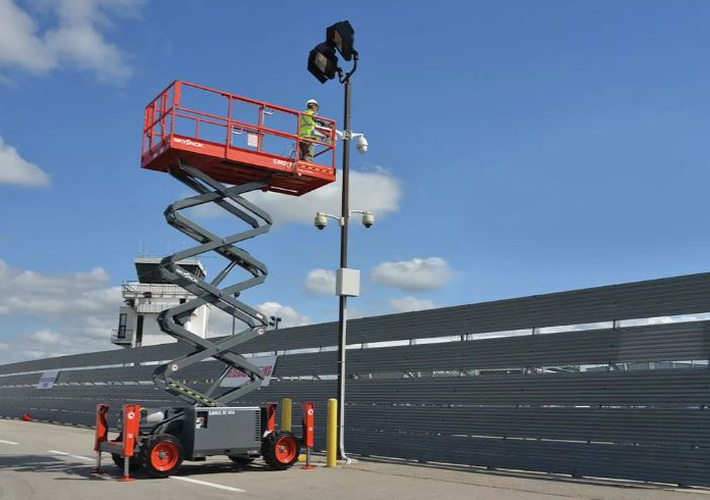
- 27ft Rough Terrain Scissor Liftwith a 33 ft working height and 1,000 lb platform capacity for outdoor work where traction, capacity, and moderate elevation are required
- 32ft Rough Terrain Scissor Lift with a 41 ft working height and 1,000 lb platform capacity for construction and agricultural applications that require greater outdoor working height
- 40ft Rough Terrain Scissor Lift with a 47 ft working height and 1,500 lb platform capacity for higher outdoor access where additional elevation and carrying capacity are needed
Comparing the available height classes makes it easier to identify the most appropriate scissor lift for the work. The next step is to consider how often the lift will need to be repositioned, whether the platform must carry multiple workers or materials, and whether the machine can move efficiently through the available access points. These factors can be just as important as maximum height when selecting a lift for consistent day-to-day productivity.
Choosing The Right Height Starts With The Task
The best scissor lift is generally the one that provides the required reach while fitting the available work area. A taller machine provides additional reach, while a lower-height model may be easier to manoeuvre in tighter areas.
Before selecting a lift, crews should confirm the actual working height rather than estimating from floor level. Ceiling height, structural depth, fixtures, ductwork, and the position of the work itself can all affect how much elevation is required.
For example, consider an electrical contractor installing overhead fixtures throughout a commercial building. Most work may be within the reach of a 19ft indoor lift, while a section with a higher open ceiling requires additional elevation. Selecting the lift around the actual working height allows the crew to complete the work efficiently without unnecessarily increasing machine size across the entire project.
How Does Platform Capacity Affect Scissor Lift Selection?
Height is only one part of answering how high do scissor lifts go. Platform capacity also matters because workers often need to bring tools, equipment, and materials with them.
Scissor lifts provide larger work platforms than many other types of access equipment, making them particularly useful for tasks where several workers or additional materials need to be positioned together.
The combined weight of workers, tools, and materials should always remain within the rated platform capacity. Selecting a lift with suitable capacity helps crews organize the work efficiently and reduces unnecessary trips between the platform and ground level.
For indoor applications, compact electric models can provide a useful combination of vertical reach, platform space, and manoeuvrability where finished floors and restricted access points need to be considered.
Ground Conditions Determine The Right Scissor Lift Type
Surface conditions have a major influence on scissor lift selection. Electric slab models are well suited to smooth, finished surfaces such as concrete floors and interior commercial spaces. Their compact dimensions also make them practical where crews need to move through tighter access points, and zero emission for indoor use.
Rough terrain scissor lifts are designed for outdoor construction, agricultural, and industrial applications where stronger traction, gradeability, and stable operation on uneven surfaces are required.
This distinction is important because two lifts with similar working heights may be intended for very different environments. Selecting the machine around both height and surface conditions helps maintain smooth positioning and consistent access throughout the project.
When Is A Scissor Lift Better Than A Boom Lift?
Scissor lifts move vertically, making them a practical choice when the work is directly above or beside the machine and a larger platform is useful. Boom lifts provide both vertical and horizontal reach, allowing operators to reach over or around obstacles.
For a broader comparison, What Is A Manlift And When Should You Use One On A Jobsite? explains how scissor lifts and boom lifts fit within the manlift category. This is beneficial when crews need to determine whether straight vertical access or additional horizontal reach is better suited to the work.
Crews can also review Boost Your Winter Projects: Scissor Lift Rentals In High River for additional guidance on scissor lift applications and equipment selection. This is useful when planning indoor construction or maintenance work where height, access, and surface conditions all need to be considered.
The Right Height Supports Efficient Jobsite Access
Understanding the question “how high do scissor lifts go” helps crews match working height, platform space, and site conditions to the requirements of the job.
The right lift provides the required access while supporting smooth movement and efficient setup on site. Selecting the appropriate height class and lift type from the start helps support consistent productivity throughout the project.
For dependable scissor lift rentals backed by practical jobsite experience across Southern Alberta, contact Mountain View Equipment Rentals to discuss the right scissor lift for your project.